Because heat dilates the veins, many vein issues increase during the summertime. As the veins expand with higher temperatures, leaky veins can get even worse, leading to more pooling of blood in your legs and problems associated with it such as pain, tiredness, cramps, swelling, and clots. There is an increased chance of seeing new spider veins, pain, and symptoms. Here are tips to help you enjoy the warm season:
1 Stay Cool
Make sure you wear clothes that won’t trap heat. Always use sunblock (SPF 30 or above) not just on your legs, but also on your face and nose, where thinner skin is more prone to developing spider veins.
2 Take a Dive
In addition to offering great respite from the summer heat, swimming is one of the best ways to promote normal circulation in your legs. Swimming is a low-impact exercise that saves your joints from the pounding, yet increases your heart rate and improves circulation overall. Also, cooling exercises like swimming and brisk evening walks are best because the lower temperatures help prevent the blood vessels from dilating.
3 Stay Hydrated
Keeping your body properly hydrated will help it effectively circulate blood, heal injuries faster, and allow for healthier skin. Though it seems like a no-brainer, patients with vein problems should pay close attention to their hydration levels during the summer when the heat can easily dry anyone out. If you plan on being out of the A/C, plan to also bring a water bottle along. Avoid caffeine.
4 Avoid Heels
We recommend flats and sandals rather than high heels as they keep your calf muscles from effectively pumping blood out of the leg. Wearing lower heels makes your calves work a little harder, keeping blood pumping throughout your legs and back to your heart where it belongs.
5 Elevate Your Legs
Since veins in our legs have to work against gravity to send blood back to the heart, it helps them if you take periodic 15-minute breaks, elevating your legs above the level of your heart. This facilitates the flow of blood back to the heart and helps “empty” some of the blood pooled in your legs.
6 Calf Pumps
Our calf muscles play a very important role in helping “push” blood upwards towards the heart against gravity. Sitting or standing for prolonged periods renders the calf pump inactive. We recommend taking breaks to walk or stand on tiptoes for 10-second intervals throughout the day whenever possible. Brisk walking, bicycling, using a stepper, and swimming is some of the best ways to strengthen calf muscles.
7 Wear Compression Stockings
They may not be at the top of anyone’s list of hot summer fashions, but compression stockings put pressure on your legs which helps to move blood up and away from your lower legs. Though you may not want to wear them outside during July and August for fear of overheating, wearing them regularly may prevent blood from pooling in your legs, which can cause or worsen vein problems.
Varicose and spider veins have ruined too many summers. To keep them from ruining this one, schedule a free consultation and complimentary vein screening at Alsara Vein Clinic at 816-396-0245 to set up a Consultation today. Current treatments allow us to permanently treat affected veins with no downtime and you can be rid of your compression stockings within days of treatments. Many insurers, including Medicare, offer coverage.
Where did summer go? It seems like only yesterday the snow had finally melted, after a prolonged winter, and here I am talking about fall. In fairness, this summer was an extraordinarily busy time for us at Alsara Vein Clinic. We saw more new patients in July than any other month in the past. Every one of my staff members worked extra, long hours to ensure each patient received top-notch care, even in the face of increased patient volume and the numerous urgent requests to see a patient the same day.
I am humbled by both the confidence that numerous referring providers have in our care and the trust of patients who refer family and friends. For example, Jim*, a 76-year-old gentleman, came to Alsara Vein Clinic after exhausting all options at hospitals and other clinics in the area. With a tracheostomy collar in place, he was unable to talk and breathe at the same time, yet he had much to discuss. After providing his medical history, he cleared his “airway trash”, drew a deep breath, and concluded by saying, “I am hanging by the last straw. My neighbor across the street advised me to come to you. You took care of him when he had no hope that anything could be done.” Since then, the topic of his conversation has been anything but medical. Taking swift breaks to inhale, he seemed more interested in talking about his friends, family and his many aspirations although, as he politely stated, “I realize that I won’t be able to participate in a bikini contest anytime soon!”
Later that week I saw Tom**, a 58-year-old, who had avoided seeking care as he was sure that leg amputation was going to be the only option available, given the advanced stage of chronic venous insufficiency in his leg. It seems that every clinic day has its fair share of patients with swelling, severe leg cramps, and restlessness. We also see many male patients with clots, bleeding, and poorly healing sores in their legs, all of which are features of advanced, chronic venous insufficiency.
A detailed duplex ultrasound scan (Mapping) provides us with a “road map” of all the key veins in the legs. The goal of every treatment modality is to get rid of the underlying varicose veins and restore proper blood flow by routing blood to the healthy veins. The new, modern, minimally invasive treatments allow us the opportunity to eliminate the diseased veins safely and effectively with very little downtime; these are also much safer than surgeries used in the past. Over the last 10 years, further advancements have occurred in our understanding of venous diseases and the options available to treat them. For instance, the latest 1470 nm laser used at Alsara Vein Clinic offers a 40-fold improvement in energy absorption, compared to older generation lasers, resulting in even less bruising and discomfort. All treatments including Endovenous Laser Ablation and Ultrasound Guided Sclerotherapy are performed in the comfort of the office setting and patients can resume normal activities immediately.
I feel very fortunate for the technology and scientific knowledge backed by the experience of successfully treating thousands of patients over the past decade. Although participating in a bikini contest is not completely ruled out for Jim*, I suspect that he will put his legs to much greater use in the years ahead!
Concerns about your legs? Call Alsara Vein Clinic at 816-396-0245 to set up a Consultation today.
Sam Gupta, MD, MPH
* Jim is an actual patient of Alsara Clinic and has graciously given permission to use his quotes, story and images. ** Tom – his name changed to protect confidentiality.
Because heat dilates the veins, many vein issues worsen during the summertime. As the veins expand with higher temperatures, leaky veins can get even worse, leading to more pooling of blood in your legs and problems associated with it such as pain, tiredness, cramps, swelling, and clots. There is an increased chance of seeing new spider veins, pain, and worse symptoms. Here are tips to help you enjoy the warm season:
Five Tips To Fight Back
Stay Cool Make sure you wear clothes that won’t trap heat. Always use sunblock (SPF 30 or above) not just on your legs, but also on your face and nose, where thinner skin is more prone to developing spider veins
Take a Dive In addition to offering great respite from the summer heat, swimming is one of the best ways to promote normal circulation in your legs. Swimming is a low-impact exercise that saves your joints from the pounding yet increases your heart rate and improves circulation overall. Also, cooling exercises like swimming and brisk evening walks are best because the coolness helps keep the blood vessels from dilating.
Stay Hydrated Keeping your body properly hydrated will help it effectively circulate blood, heal injuries faster, and allow for healthier skin. Though it seems like a no-brainer, patients with vein problems should pay especially close attention to their hydration levels during the summer when the heat can easily dry anyone out. If you plan on being out of the AC, plan to also bring a water bottle along. Avoid caffeine.
Avoid Heels We recommend ats and sandals rather than high heels that keep your calf muscles from effectively pumping blood out of the leg. Wearing lower heels makes your calves work a little harder, keeping blood pumping out of your legs and back to your heart where it belongs.
Wear Compression Stockings They may not be at the top of anyone’s list of hot summer fashions, but compression stockings put pressure on your legs that helps to move blood up and away from your lower legs. Though you may not want to wear them outside during July and August for fear of overheating, wearing them regularly may prevent blood from pooling in your legs, which can cause or worsen vein problems.
Varicose and spider veins have ruined too many summers. To keep them from ruining this one, schedule a free consultation and complimentary vein screening at Alsara Vein Clinic. Current treatments allow us to permanently treat affected veins with no downtime and you can be rid of your compression stockings within days of treatments. Many insurers including Medicare offer coverage. Click here to see Insurance We Typically Accept.
Kick start this summer with healthy legs that look and feel great.


 Make sure you wear clothes that won’t trap heat. Always use sunblock (SPF 30 or above) not just on your legs, but also on your face and nose, where thinner skin is more prone to developing spider veins.
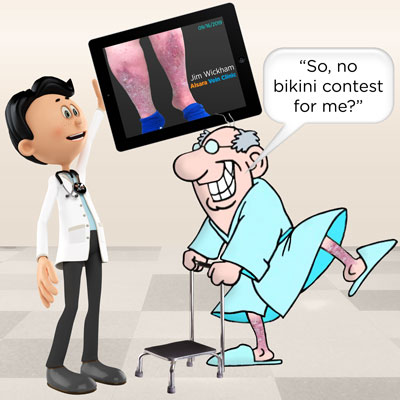 I am humbled by both the confidence that numerous referring providers have in our care and the trust of patients who refer family and friends. For example, Jim