Last week I attended the monthly local medical society meeting at the Benton Club in St. Joseph. The bartender gave me a tour, attempting to squeeze in every highlight of its 100+ year history, while all the other member physicians gathered and greeted each other in the reception hall. Soon we were watching a local cardiologist give a presentation on the use of a non-invasive CT Scan to compute in seconds the risk of a heart attack in patients.
As I watched the colorful pictures on the screen, I thought of my mother, who passed away at a fairly young age after living with “heartburn” for years, that was treated with medications for indigestion. Being a woman and a diabetic are both major factors that confound the symptoms of heart disease. A slightly higher index of suspicion could have saved her life and one of the newer diagnostic tools such as the Coronary Calcium Scan could have kept her health in check.
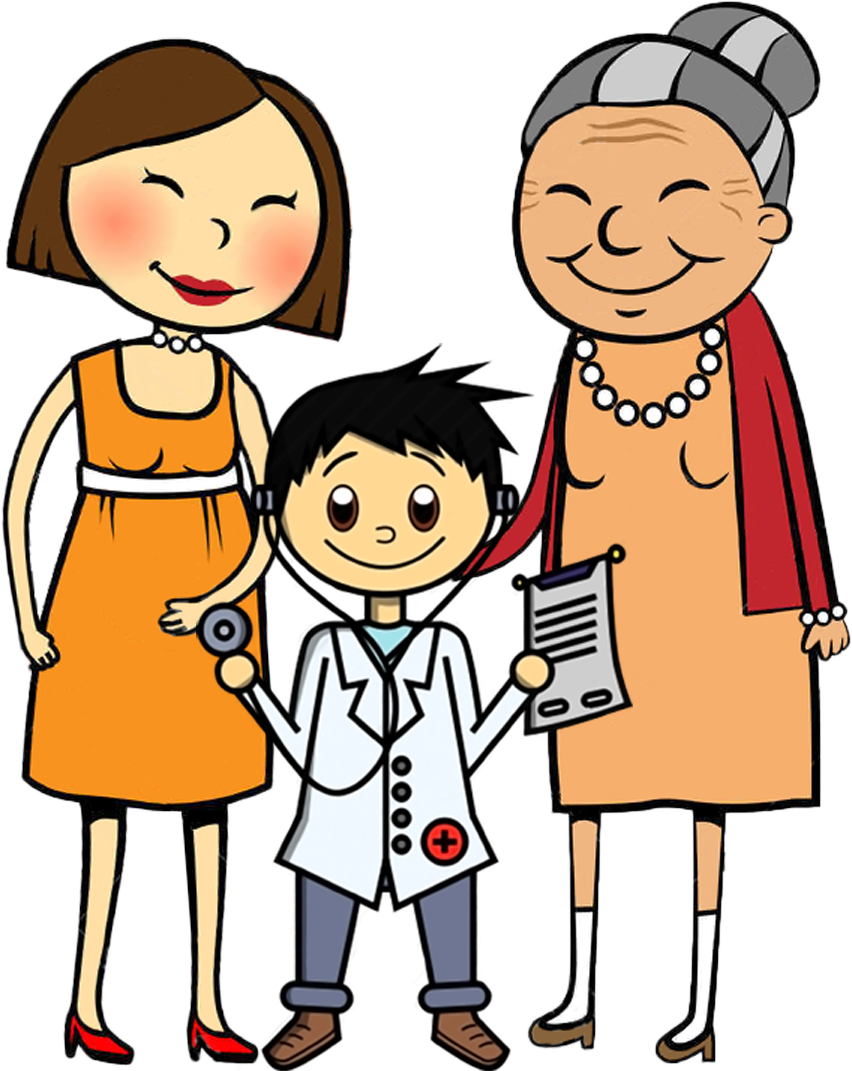
My thoughts shifted to one of my recent patients, a 93-year-old woman with advanced venous disease in her legs. She was brought to my clinic in a wheelchair by her two daughters. When I asked her what changes she hoped to accomplish, she promptly responded, “Can you help me get me out of this wheelchair?”. There was no hesitation in her voice as she expressed her desire to not only live longer but also enjoy her life along the way.
Life is a beautiful journeyI witness the daily hopes and aspirations of numerous patients like this amazing woman who is 93 years “young”. Some have the usual symptoms of heaviness in the legs, cramps, restlessness, and swelling. Many others have lived long enough with vein problems in their legs and present with clots or sores in their legs. Hope tends to be contagious. Earlier this week, while treating a patient who came with a clot in her leg, I found out that her husband was also on my schedule. He has lived with swelling and sores in his legs for many years. She indicated with pride that, “I diagnosed his problem myself and told him to come and see you”. I won’t be surprised if he will soon be able to enjoy the full use of his legs without the constant fear of ongoing pain, infection, or even risk of amputation.
My kids did not have an opportunity to spend time with my mother, their grandmother, and I never had a chance to be her doctor. I take consolation from knowing that my work allows many of my patients to enjoy a longer, healthier life. Life is much more beautiful when mothers and grandmothers are part of the journey.
How were you affected by your legs previously? What couldn't you do? How has that changed now?
I wore out quickly and I woke up several times a nite.
What improvements have you seen in your legs?
No restless legs. Aching seems to be gone.
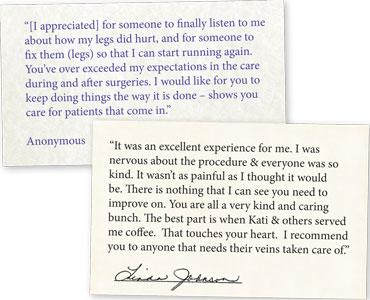
Additional Comments: What did you appreciate? What makes us different than other medical clinics? What could we have done better to exceed your expectations? What changes would you like to see?
More prep so you are prepared for the soreness after. I know all bodies react differently but for the ones like me, it would have been nice to know ahead of time. Everyone is very nice and fun to be around!!!
Leg Pain and/or Restless Legs Syndrome is a very common symptom of deeper vein problems. We've helped thousands achieve relief.
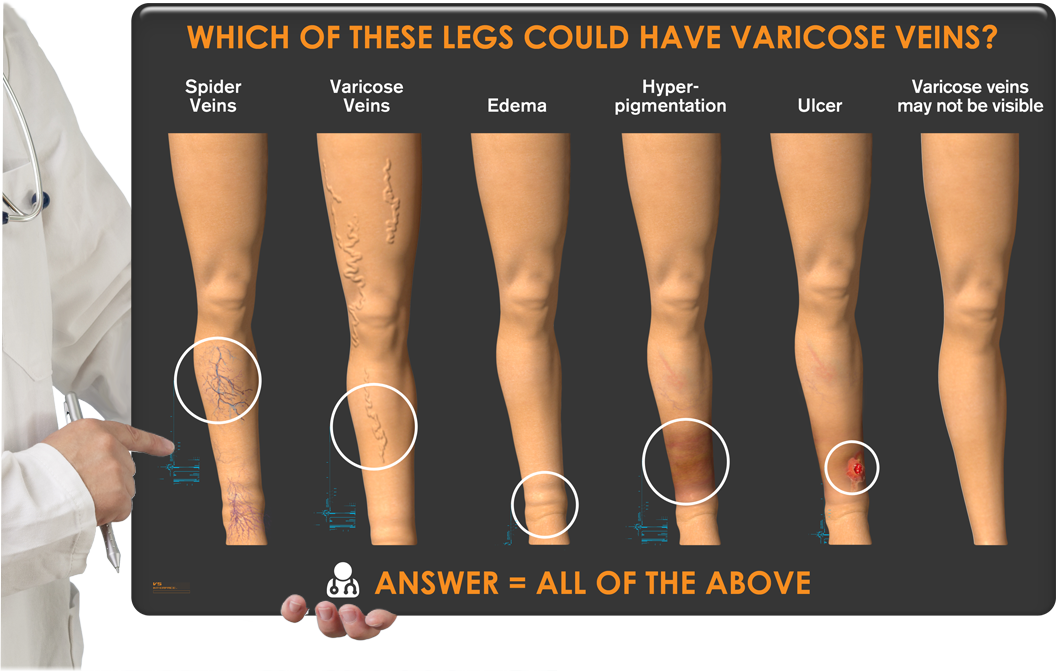
Even if you cannot see any visible or bulging varicose veins, your ongoing leg pain and/or restless legs syndrome may still be due to venous insufficiency. Other symptoms may include heavy legs, aching legs, tired legs, burning sensation in legs, itching, leg cramps or "charley horse", leg inflammation, swelling feet or ankles, skin discoloration, sores that heal poorly, skin ulcers, bleeding, even blood clots.
An estimated 60% of women and men suffer from vein disease.
Signs and Symptoms
Aching
Burning or numbness
Cramping or 'Charley horse'
Heaviness
Itching
Leg pain
Restless legs
Tiredness
Swelling in feet ankles and calves
Left untreated, may result in skin discoloration, bleeding veins, sores that heal poorly, and blood clots.
How can I know if this is my problem?
We offer Consultations with a Board Certified Provider. They will visually examine your legs, evaluate your symptoms, answer any questions you may have, and determine whether an ultrasound "mapping" of your leg veins is necessary.
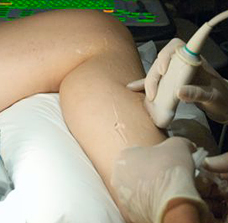
Ultrasound scanning is done in the office, is pain-free, and the results are available immediately. The Phlebologist (leg vein specialist) will perform a detailed examination, make a diagnosis, and then will discuss with you the best treatment options. Treatment is designed for each patient based on the results of the examination and ultrasound scan. Every patient is different, so an individualized treatment plan is essential.
How are varicose veins treated?
Fortunately, the days of painful vein stripping are over. Now, the treatments available are much safer, more effective, and patients are able to resume activities right away. We offer several minimally invasive, non-surgical, in-office procedures to ensure immediate and long-term results, including EVLA (Endovenous Laser Ablation), USGS (Ultrasound Guided Sclerotherapy), VenaSeal Closure System, and Microphlebectomy.
Leg problems don't wait – why should you?
If you're concerned about leg pain, endure leg pain or restless legs at night, or just wonder what is causing your lower leg pain or restless legs, claim your Consultation today and/or request an emailed informational brochure.
About Alsara Vein Clinic and Dr. Sam Gupta
Your Vein Specialist, Sam Gupta, M.D., M.P.H. completed his medical training at the Mayo Clinic and Masters in Public Health from Harvard University. He is one of the 795 Vein Specialists in the nation certified by The American Board of Venous & Lymphatic Medicine. He has devoted his career solely to the diagnosis and management of the entire spectrum of vein disorders. Alsara Vein Clinic is focused on varicose vein treatment and serves the greater northwest Missouri area. Many patients who have come to us with symptoms of leg pain and restless legs have found lasting relief with our virtually pain-free in-office varicose veins treatment. We offer Consultations, no referral necessary.
Veins are all we do, all day, every day. We've treated over 12,000 patients, many of whom sought relief from leg pain and/or restless legs and had no idea what was causing it.
Restless Leg Syndrome? Alsara Vein Clinic has helped many patients achieve relief.
Varicose Veins and Restless Leg Syndrome (RLS) have many symptoms in common: an urge to move your legs, that creepy-crawly feeling, itching, tingling, and restlessness. These symptoms may be an indication of poor circulation, even if you have no visible varicose veins. Phlebologist and Vein Specialist Dr. Sam Gupta can help diagnose and treat restless leg syndrome and symptoms. Dr. Gupta is certified by the American Board of Venous and Lymphatic Medicine.
At Alsara Vein Clinic, we treat vein problems all day, every day.
Varicose veins are a common cause of secondary RLS
Jumping can be good... as long as you have control over it!
Varicose veins are a common cause of secondary RLS (restless leg syndrome). For those who have varicose veins, the symptoms of restlessness in legs center on the fact that leg muscles and tissue are not getting enough oxygen- and nutrient-rich blood. That "pins-and-needles" feeling is their body's way of telling them they need more blood flowing through their legs, and it creates an urge to move, making it difficult to sleep at night. In addition to cramps ("Charley horse") and restlessness in the legs, varicose vein sufferers may also notice heaviness, excessive tiredness, and aching in the legs. Left untreated the underlying venous insufficiency (pooling of blood in legs) may cause swelling, clots, and sores.
Primary Restless Leg Syndrome (RLS)
Some patients have Primary RLS (restless leg syndrome). This means that the cause is unknown. In addition to varicose veins, there are other secondary causes of RLS including iron deficiency anemia, kidney failure, side effects of certain medications (such as medications used to control depression), peripheral neuropathy, and dehydration (inadequate fluid intake or caffeine intake).
If you experience restlessness in your legs, consult with a Vein Specialist to see if varicose veins may be the cause. A duplex ultrasound examination in the comforts of the office setting can help determine if varicose veins are present.
Treatment of varicose veins may alleviate the symptoms of RLS (restless leg syndrome). One study found that 98% with RLS (restless leg syndrome) and varicose veins noted improvement after treatment of varicose veins with sclerotherapy.* Newer treatments such as endovenous laser ablation are more effective than sclerotherapy and offer longer-term solutions. The use of medications to mask symptoms of RLS (restless leg syndrome) may cause side effects without addressing the underlying cause. Other ways to manage symptoms of restlessness in the legs include calf exercises, weight loss, and the use of graduated compression stockings.
*Dermatol Surg. 1995 Apr;21(4):328-32. The effect of sclerotherapy on restless legs syndrome.
Restless Legs and Leg Cramps are Common Symptoms of Varicose Veins
Leg cramps and restless legs syndrome (RLS) are usually the first symptoms of varicose veins. One study showed that people suffering from varicose veins have a sixty-seven percent higher chance of experiencing cramps than those without. The same study reported that an overwhelming ninety-one percent experienced cramps most frequently in the calf region.*
Healthy veins in the legs collect de-oxygenated blood and return it to the heart and lungs where it is replenished with oxygen and nutrients. Varicose veins are “leaky pipes” in our legs that allow blood to pool and become stagnant. Due to the continued buildup of pressure in the deoxygenated blood and toxins, muscles in our legs begin functioning improperly. This results in the muscle cramps and restlessness many of our patients have experienced in their legs.
Since pressure is highest after prolonged sitting or standing due to the force of gravity, leg cramps and restless legs are noticed by patients more often at the end of the day. There can be other causes of cramps and restlessness in the legs.
However, if varicose veins are the contributing factor, the use of medications such as Requip, Mirapex, or Quinine may simply mask symptoms of RLS without addressing the underlying cause. Supplements, such as magnesium and calcium, may help relax the muscles and lead us to believe that nutritional supplements alone will rectify the problem. Unfortunately, the poor blood flow devoid of adequate oxygen remains uncorrected and the underlying disease may evolve into more serious problems such as blood clots, bleeding, infection of the skin in legs, and sores that are slow to heal.
Treatment of varicose veins may alleviate the symptoms of restless legs (RLS). In fact, one study found that ninety-eight percent of patients with RLS and varicose veins noted that the symptoms improved after using sclerotherapy.** Another study reported that eighty-nine percent of patients enjoyed improvement after endo-venous laser ablation and sclerotherapy treatments.*** New treatments of varicose veins are safe, effective, virtually painless, and require no downtime. Almost all insurance companies, including Medicare and Medicaid, offer coverage for symptomatic varicose veins. Visit the Alsara Vein Clinic YouTube channel to see patient testimonials, some of who have had cramps and restless legs before treatment. If you experience cramps or restlessness in your legs, call us right away to schedule a free consultation at 816-396-0245.
*Dermatol Surg. 1995 Apr;21(4):328-32. The effect of sclerotherapy on restless legs syndrome. **Hirai, M, et al., ‘Prevalence and characteristics of muscle cramps in patients with varicose veins’ Vasa, November 2000,
29(4):269-73. ***Phlebology. 2008;23(3):112-7. doi: 10.1258/phleb.2007.007051. The effect of endovenous laser ablation on restless legs
syndrome.
During the initial stages of varicose veins, patients usually have mild symptoms, which are experienced more toward the end of the day. The onset of symptoms is often very subtle, so much so that many people forget how their legs felt before they had problems. As the condition worsens, symptoms become more noticeable.
The initial signs and symptoms may include:
Aching
Burning or numbness
Cramping or 'Charley horse'
Heaviness
Itching
Leg pain
Restlessness in legs
Tiredness
Swelling in feet ankles and calves
Left untreated, may result in skin discoloration, bleeding veins, sores that heal poorly, and blood clots.
Over time, the symptoms will worsen and could result in skin discoloration, sores, blood clots, frequent skin infections, and bleeding.
It might be surprising to learn that restless leg syndrome, leg cramps, swollen ankles, ulcers, varicose veins, and spider veins could all be symptoms of vein disease. We've helped thousands achieve relief with in-office treatments.
Schedule your Consultation today with Alsara Vein Clinic.
Left untreated, they continue to worsen and turn into a serious problem.
Maybe you’ve seen the blue or purple squiggly veins on your legs that look like lines on a roadmap and wondered how to get rid of them. Maybe you are experiencing pain, cramps, restlessness, or have sores on your legs, and you were told by your Primary Care Provider that you have varicose veins. Perhaps you wondered “What the heck are varicose veins anyway” and “How do I get rid of them?”
What is a Varicose Vein (and CVI)?
In simplest terms, varicose veins are faulty blood vessels that have become overstretched and swollen with blood.
When your heart beats, it pumps blood through arteries to every part of your body carrying oxygen and essential nutrients. Since you have a limited amount of blood (about 5 liters in an adult), the deoxygenated blood returns to the heart via countless veins in your body. The veins in your legs are farthest from the heart and must work against gravity to push blood back to the heart. Compounded by other risk factors, some veins wear out over time and become “varicose”. The pooling of blood in varicose veins may cause symptoms such as heaviness, tiredness, itching, burning, cramping, restlessness and pain. Left untreated, the increased pressure of blood in the leg veins can leak out, causing problems such as edema, skin discoloration, sores in legs that heal poorly, and frequent skin infections. This condition is called Chronic Venous Insufficiency (CVI).
Who gets them?
Although varicose veins affect both men and women, they are slightly more common in women who tend to have them at an earlier age. This may also have to do with the fact that men are less inclined to seek timely medical care. Hence, it is not a surprise that men have more advanced stages of varicose veins and CVI by the time they see a vein specialist compared to women. People in general are more likely to get them as they get older.
Frequently there is a genetic predisposition to vein problems. That means that if your mom or your sister has them, you are more likely to also have them. Things that put pressure on your legs and feet — like being overweight or standing for a long time, every day, without exercise — can also cause varicose veins. Pregnancies also make veins worse due to increased pressure of the uterus and the extra blood volume.
Do I need these veins? How do I get rid of them?
Once a vein is varicose, it is a diseased blood vessel much like a “weed” in your yard. Just like weeds compete for space and nutrients in your yard (and are formidable competitors!), varicose veins have weakened walls that facilitate easy entry of blood but instead of pushing the blood back in circulation, the blood tends to pool in them causing a wide variety of problems including life-threatening blood clots.
In the past, varicose veins were “stripped” much like pulling weeds from the yard. This was a painful, imprecise, and invasive surgery with significant downtime, scarring, and risk of complications. Even worse, many patients required additional treatment due to other veins rapidly becoming varicose.
In the last 15 to 20 years, our increased understanding of venous disease, modern tools available for accurate diagnosis, and minimally invasive treatments have revolutionized how we treat vein problems in legs. After your vein specialist has performed a detailed ultrasound scan of your legs, he/she will create a “road map”. Then, using tools such as Endovenous Laser Ablation (EVLA), your Vein Specialist can seal the underlying varicose veins at their source, much like closing the large root of weeds from the inside. Any smaller, persistent veins can then be treated using injection sclerotherapy that is analogous to using a weed killer in your yard. Some unsightly varicose veins are removed by microphlebectomy, the careful removal of unwanted veins through tiny openings using very fine instruments without the need for sutures or risk of scarring.
Current treatments are very safe, effective, and provide long-lasting relief without any downtime or painful recovery. Since varicose veins and CVI are serious problems, almost all health insurance companies, including Medicare and Medicaid, offer coverage for necessary scans and treatments.
Contact Alsara Vein Clinic at 816-396-0245 to set up a Consultation today.
Where did summer go? It seems like only yesterday the snow had finally melted, after a prolonged winter, and here I am talking about fall. In fairness, this summer was an extraordinarily busy time for us at Alsara Vein Clinic. We saw more new patients in July than any other month in the past. Every one of my staff members worked extra, long hours to ensure each patient received top-notch care, even in the face of increased patient volume and the numerous urgent requests to see a patient the same day.
I am humbled by both the confidence that numerous referring providers have in our care and the trust of patients who refer family and friends. For example, Jim*, a 76-year-old gentleman, came to Alsara Vein Clinic after exhausting all options at hospitals and other clinics in the area. With a tracheostomy collar in place, he was unable to talk and breathe at the same time, yet he had much to discuss. After providing his medical history, he cleared his “airway trash”, drew a deep breath, and concluded by saying, “I am hanging by the last straw. My neighbor across the street advised me to come to you. You took care of him when he had no hope that anything could be done.” Since then, the topic of his conversation has been anything but medical. Taking swift breaks to inhale, he seemed more interested in talking about his friends, family and his many aspirations although, as he politely stated, “I realize that I won’t be able to participate in a bikini contest anytime soon!”
Later that week I saw Tom**, a 58-year-old, who had avoided seeking care as he was sure that leg amputation was going to be the only option available, given the advanced stage of chronic venous insufficiency in his leg. It seems that every clinic day has its fair share of patients with swelling, severe leg cramps, and restlessness. We also see many male patients with clots, bleeding, and poorly healing sores in their legs, all of which are features of advanced, chronic venous insufficiency.
A detailed duplex ultrasound scan (Mapping) provides us with a “road map” of all the key veins in the legs. The goal of every treatment modality is to get rid of the underlying varicose veins and restore proper blood flow by routing blood to the healthy veins. The new, modern, minimally invasive treatments allow us the opportunity to eliminate the diseased veins safely and effectively with very little downtime; these are also much safer than surgeries used in the past. Over the last 10 years, further advancements have occurred in our understanding of venous diseases and the options available to treat them. For instance, the latest 1470 nm laser used at Alsara Vein Clinic offers a 40-fold improvement in energy absorption, compared to older generation lasers, resulting in even less bruising and discomfort. All treatments including Endovenous Laser Ablation and Ultrasound Guided Sclerotherapy are performed in the comfort of the office setting and patients can resume normal activities immediately.
I feel very fortunate for the technology and scientific knowledge backed by the experience of successfully treating thousands of patients over the past decade. Although participating in a bikini contest is not completely ruled out for Jim*, I suspect that he will put his legs to much greater use in the years ahead!
Concerns about your legs? Call Alsara Vein Clinic at 816-396-0245 to set up a Consultation today.
Sam Gupta, MD, MPH
* Jim is an actual patient of Alsara Clinic and has graciously given permission to use his quotes, story and images. ** Tom – his name changed to protect confidentiality.


 As I watched the colorful pictures on the screen, I thought of my mother, who passed away at a fairly young age after living with “heartburn” for years, that was treated with medications for indigestion. Being a woman and a diabetic are both major factors that confound the symptoms of heart disease. A slightly higher index of suspicion could have saved her life and one of the newer diagnostic tools such as the Coronary Calcium Scan could have kept her health in check.
 Life is a beautiful journeyI witness the daily hopes and aspirations of numerous patients like this amazing woman who is 93 years “young”. Some have the usual symptoms of heaviness in the legs, cramps, restlessness, and swelling. Many others have lived long enough with vein problems in their legs and present with clots or sores in their legs. Hope tends to be contagious. Earlier this week, while treating a patient who came with a clot in her leg, I found out that her husband was also on my schedule. He has lived with swelling and sores in his legs for many years. She indicated with pride that, “I diagnosed his problem myself and told him to come and see you”. I won’t be surprised if he will soon be able to enjoy the full use of his legs without the constant fear of ongoing pain, infection, or even risk of amputation.
 Ultrasound scanning is done in the office, is pain-free, and the results are available immediately. The
  Fortunately, the days of painful vein stripping are over. Now, the treatments available are much safer, more effective, and patients are able to resume activities right away. We offer several minimally invasive, non-surgical, in-office procedures to ensure immediate and long-term results, including EVLA (


 If you experience restlessness in your legs, consult with a Vein Specialist to see if varicose veins may be the cause. A duplex ultrasound examination in the comforts of the office setting can help determine if varicose veins are present.
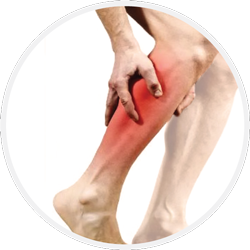 Leg cramps and restless legs syndrome (RLS) are usually the first symptoms of varicose veins. One study showed that people suffering from varicose veins have a sixty-seven percent higher chance of experiencing cramps than those without. The same study reported that an overwhelming ninety-one percent experienced cramps most frequently in the calf region.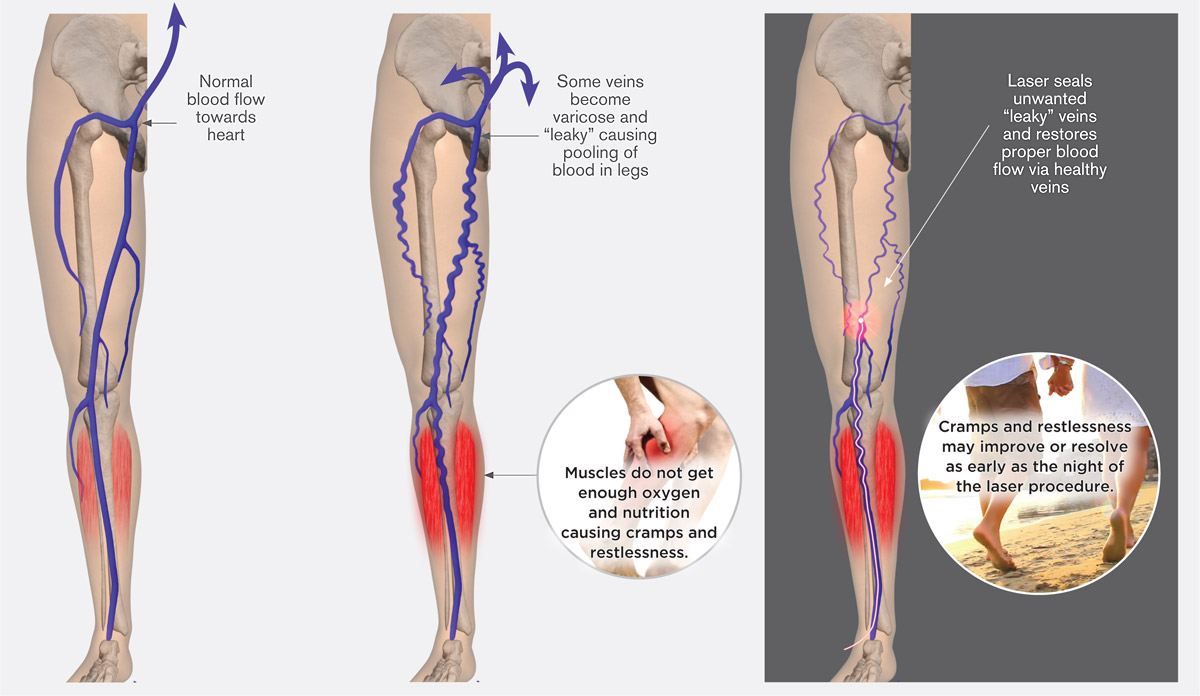
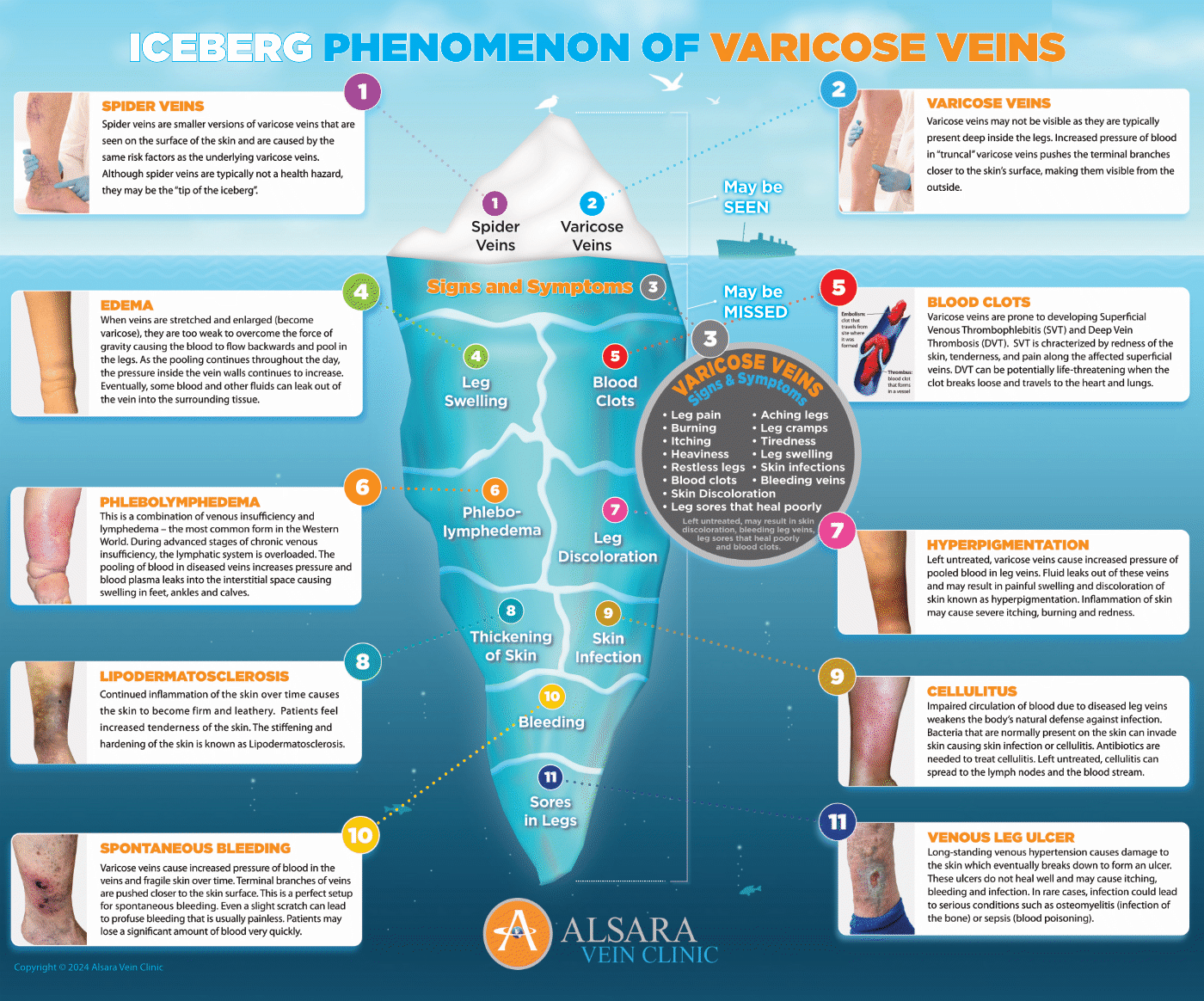

 When your heart beats, it pumps blood through arteries to every part of your body carrying oxygen and essential nutrients. Since you have a limited amount of blood (about 5 liters in an adult), the deoxygenated blood returns to the heart via countless veins in your body. The veins in your legs are farthest from the heart and must work against gravity to push blood back to the heart. Compounded by other risk factors, some veins wear out over time and become “varicose”. The pooling of blood in varicose veins may cause symptoms such as heaviness, tiredness, itching, burning, cramping, restlessness and pain. Left untreated, the increased pressure of blood in the leg veins can leak out, causing problems such as edema, skin discoloration, sores in legs that heal poorly, and frequent skin infections. This condition is called Chronic Venous Insufficiency (CVI).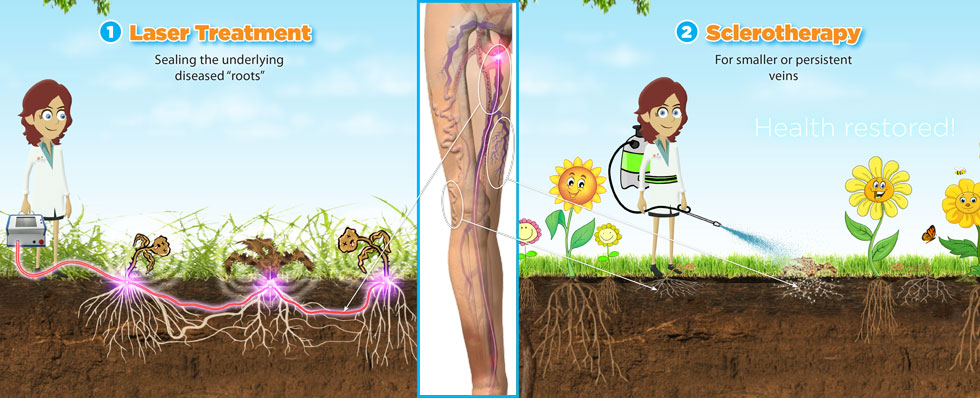

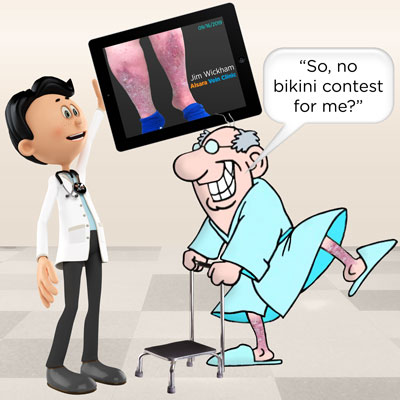 I am humbled by both the confidence that numerous referring providers have in our care and the trust of patients who refer family and friends. For example, Jim