Chronic Venous Insufficiency (CVI) is a medical condition in which the veins in the body are unable to pump oxygen-depleted blood back to the heart, often resulting in chronic swelling in the legs.
How is CVI related to Varicose Veins?
As varicose vein symptoms worsen, there is increased backflow (reflux) of blood, which causes swelling in the ankles, feet, and legs. This is followed by discoloration around the ankles and feet. Left untreated, this may result in stasis dermatitis (dry, flaky rash), phlebitis (blood clots), and ulcers (skin sores).
Due to increased pressure of blood in the legs, even a minor injury may result in profuse bleeding. Poor circulation may cause frequent skin infections and sores that do not heal.
Without treatment, CVI can worsen and lead to leg swelling, skin discoloration, bleeding varicose veins, recurrent skin infections, blood clots and poorly healing sores (ulcers):
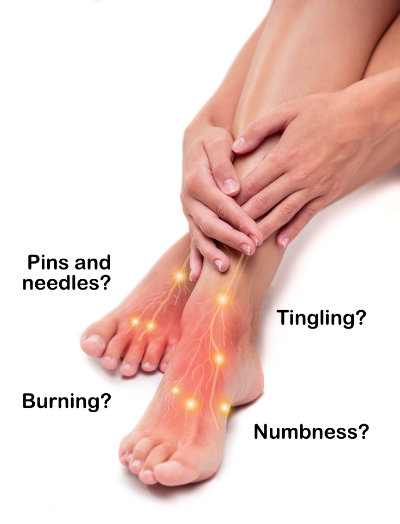
Neuropathy in Legs? – Could be due to failed veins
Understanding the Connection Between Neuropathy and Venous Insufficiency
Veins play a crucial role in circulating blood back to the heart. In the legs, they must work against gravity to push blood upward. When some veins fail to function properly, they may allow fluid to leak into surrounding tissues, irritating nearby nerves and potentially leading to neuropathy-like symptoms in the legs and feet. However, unlike true neuropathy, which involves permanent nerve damage, neuropathy-like symptoms linked to venous insufficiency tend to fluctuate throughout the day. These symptoms usually intensify with prolonged sitting or standing, particularly in the evening, and tend to improve with leg elevation or in the morning before lowering your legs below heart level.
The failed (varicose) veins are often not visible from the outside and can only be seen with the help of ultrasound. Several factors contribute to the development of varicose veins, including genetics, aging, prolonged standing, pregnancy, and excess weight. Common symptoms include leg heaviness, fatigue, aching, cramping, and restlessness. As pressure builds in the affected veins, blood can pool, leading to fluid leakage into surrounding tissues and causing swelling (edema). If left untreated, varicose veins can progress to chronic venous insufficiency (CVI), which may result in skin discoloration, recurrent infections, bleeding, blood clots, and non-healing leg ulcers.
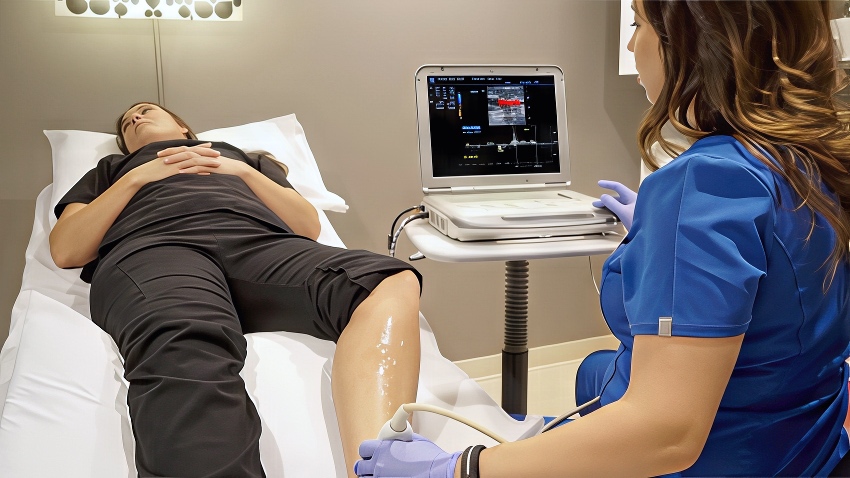
Duplex Ultrasound
Unlike neuropathy caused by diabetes, infections, vitamin deficiencies, or injuries—which are often permanent—neuropathy linked to venous insufficiency can fluctuate throughout the day and may be reversible. Symptoms tend to worsen with prolonged sitting or standing but often improve when the legs are elevated. Research* indicates that 65% of patients with both conditions experienced significant improvement or complete resolution of their neuropathic symptoms after receiving vein treatment.
The good news is that at Alsara Vein Clinic, a simple duplex ultrasound can help determine whether venous insufficiency is contributing to neuropathy symptoms. Treating diseased veins is a safe, virtually painless process with no required downtime. All procedures are performed in a comfortable clinic setting, and most insurance providers—including Medicare and Medicaid—cover treatment for symptomatic varicose veins.
*Improvement of Neuropathy after Venous Ablation – Dobson et al, Journal of Vascular Surgery March 2020


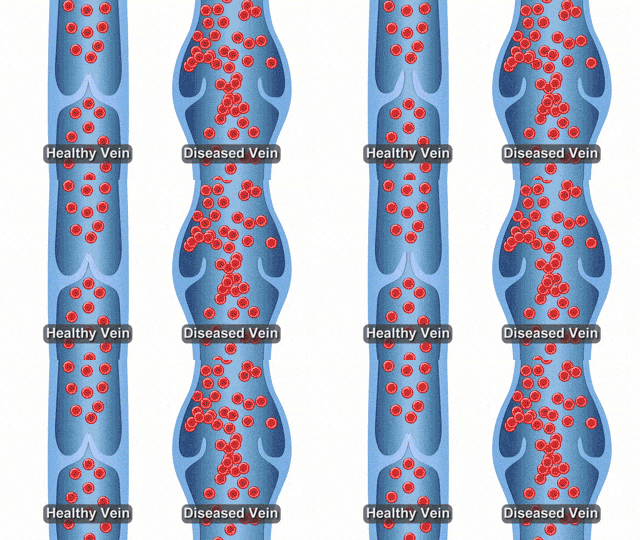 As varicose vein symptoms worsen, there is increased backflow (reflux) of blood, which causes swelling in the ankles, feet, and legs. This is followed by discoloration around the ankles and feet. Left untreated, this may result in stasis dermatitis (dry, flaky rash), phlebitis (blood clots), and ulcers (skin sores).