Varicose veins treatment using Endovenous Laser Ablation, or EVLA, is a non-surgical and minimally invasive varicose veins treatment that offers an effective alternative to the surgical stripping of veins. It is performed in the office under local anesthetic using our unique numbing system. We also offer needle-free numbing for the best comfort. Endovenous Laser Ablation is the safest, most effective, and long-term solution that science and modern medicine offers for varicose vein treatments.
How Does the EVLA Procedure Work?
Under ultrasound guidance, a thin fiber-optic probe is inserted through a tiny entry point, usually near the knee. Laser energy is delivered to seal the faulty vein so that blood cannot flow through it. This eliminates unsightly bulging and enables the blood to be diverted to healthy veins in the leg, thereby alleviating any symptoms. Immediately after the procedure patients can resume daily activity. Most patients are able to return to work immediately.
Laser Treatment of Varicose Veins
Innovative ThermaLite 1470 nm Laser System
Alsara Vein Clinic exclusively uses the leading edge EVLA technology (1470 nm laser system), which decreases discomfort and bruising, while maintaining the unparalleled efficacy and safety of laser technology. Studies have shown that Endovenous Laser Ablation (EVLA) is more effective in treating varicose veins than Radiofrequency Ablation (VNUS Closure). Traditional laser machines have utilized lower frequencies (810 nm or 980 nm) and target blood (hemoglobin) within the veins. However, there was more, although temporary, bruising and soreness noted with these laser frequencies than with radiofrequency ablation. The new ThermaLite 1470 nmlaser machines target water in the vein wall instead of hemoglobin, which results in much less discomfort, practically no bruising, and a fast return to normal activities. This is particularly important for people living active lifestyles who want to resume their activities right away and would like to wear shorts or skirts. The new 1470nm offers the best of both worlds. Alsara Vein Clinic has treated numerous patients using the new 1470 nmLaser with almost no discomfort or any bruising after the procedure. Our patients cannot be happier with the results.
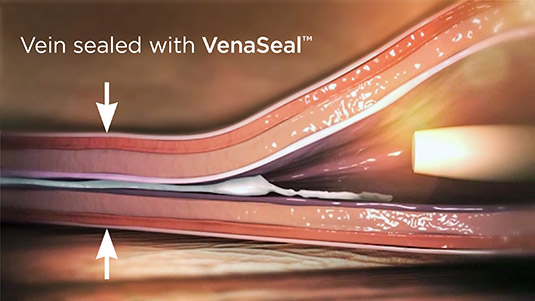
VenaSeal™ is a revolutionary FDA-approved medical-grade superglue for the treatment of varicose veins. The VenaSeal™ Closure System is a non-thermal treatment option that seals – or closes – the diseased vein using a small amount of specially formulated medical adhesive that is delivered to the diseased vein. The adhesive permanently seals the vein, and blood is rerouted through nearby healthy veins. Unlike other treatment options, only a single injection of numbing medication is needed, and no compression stockings are necessary post-treatment, which reduces discomfort and recovery time. Many patients are able to return to normal activity immediately after the procedure.
VenaSeal
How do I get started with the Varicose Vein Treatment Process?
To determine whether or not the Laser Treatment or VenaSeal™ procedures we offer are right for you, please schedule a free consultation.
During this free consultation, you will meet with one of our board-certified vein specialists to assess your symptoms and discuss treatment options appropriate for you.
Treatment of ropey varicose veins may require one or more combinations of the following: Endovenous Laser Ablation, VenaSeal Closure System, Injection Sclerotherapy (including Ultrasound Guided Sclerotherapy and Catheter Assisted Sclerotherapy), and Microphlebectomy.
Large bulging veins that appear on the skin surface as ropey veins are frequently a major branch of a deeper (inside the leg) saphenous vein, such as the Great Saphenous Vein, which is often, but not always, involved. Ultrasound testing is frequently necessary to determine the level of involvement. If the saphenous vein is involved, it would likely need to be sealed first using Endovenous Laser Ablation (EVLA) or VenaSeal Closure System. This step in itself is sometimes enough to “shrink” the bulging vein. Any remaining unsightly veins may be either closed with sclerotherapy (using medication to seal the vein) or sections of the bulging veins may be removed by microphlebectomy. Unlike vein stripping, microphlebectomy is a simple, out-patient procedure performed under local anesthesia. Using very fine instruments, sections of unwanted veins are carefully removed through tiny openings without the need for sutures and with minimal risk of scarring. Vein treatments may be staged (occur on separate days) or a combination of treatments may be performed on the same day if recommended by your Phlebologist (Vein Specialist).
Now you may be able to get rid of the unsightly ropey varicose veins during your lunch break (and start looking for that pair of shorts you thought you could never wear!).
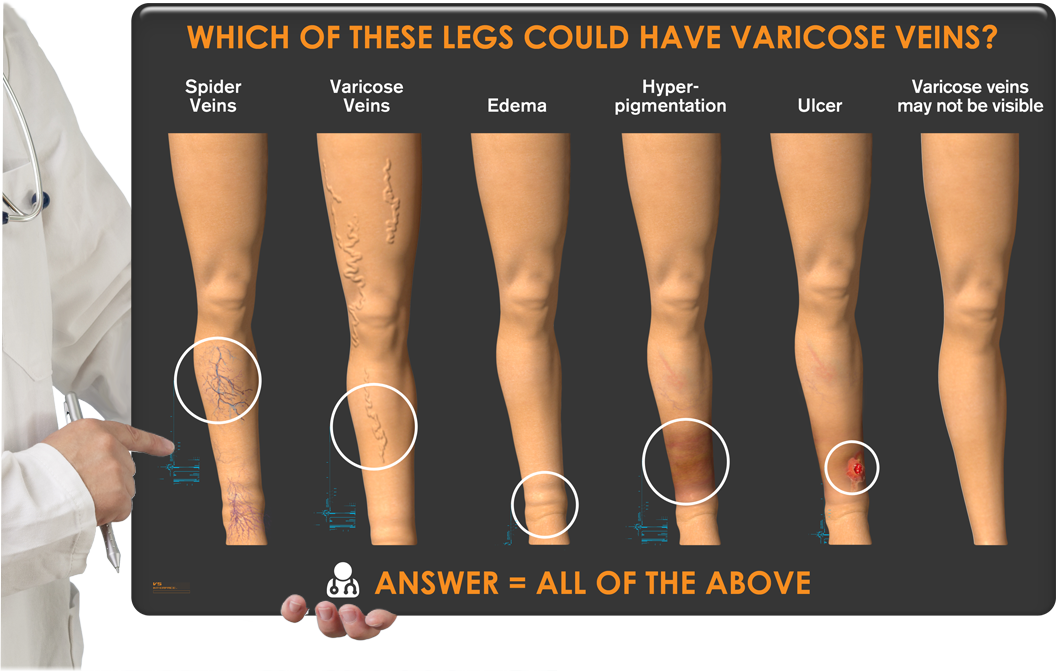
Many patients now recognize that varicose veins may not be visible from the outside. Most of our patients report experiencing tiredness, cramping (charley horse), restlessness, or swelling in the legs. Those whose condition has not reached one of the advanced stages often wonder if they are at increased risk of anything that could be limb or life-threatening.
At least one-third of our patients clearly have signs of advanced venous insufficiency – when varicose veins have progressed to a point where the chronic pooling of blood (stasis) in the legs causes skin changes. They may notice skin discoloration, thickening or hardening of the skin, recurrent skin infections, bleeding that can be profuse, and poorly healing sores in the legs. In addition, varicose veins may be an early warning sign of potentially deadly blood clots.
We routinely see patients with blood clots. Some are referred by their primary care providers and others present themselves with concerns about blood clots. Yet there are many patients who are surprised to find that they have a blood clot when we examine them using duplex ultrasound.
Blood clots are far more common than most people think. Serena Williams and Hillary Clinton are among the dozens of celebrities who have suffered consequences due to blood clots. James “Jimmy” Stewart from the movie It’s a Wonderful Life and NBC journalist David Bloom lost their lives from blood clots. David Bloom’s wife, Melonie Bloom, has devoted her life to raising awareness of thrombosis.
The association between varicose veins and deep vein thrombosis (DVT) was demonstrated in a landmark Taiwanese study published in JAMA (Journal of the American Medical Association). Reviewing the health records of over 425,000 adults, the study found a higher rate of pulmonary embolism (when a blood clot in the leg breaks off and travels to the lung) and peripheral artery disease in patients with varicose veins.
Varicose veins increase the risk of deep vein thrombosis (DVT) by five times
DVT is a clot in the legs, which can lead to amputation or even death
Varicose veins make people twice as likely to develop a pulmonary embolism
Varicose veins double the risk of peripheral artery disease, which reduces blood flow
Varicose veins are veins with weakened walls that fail and cause pooling of blood in the legs. Patients with varicose veins are known to have increased levels of inflammatory and pro-thrombotic markers. These patients have a considerably high risk of forming blood clots in their legs.
Not all clots are serious, but they often tell us about an underlying problem such as impaired blood flow that can lead to greater problems down the road. As Dr. Chang, the lead author of the Taiwanese study stated, “varicose veins deserve careful monitoring and early evaluation”.
Left untreated, they continue to worsen and turn into a serious problem.
Maybe you’ve seen the blue or purple squiggly veins on your legs that look like lines on a roadmap and wondered how to get rid of them. Maybe you are experiencing pain, cramps, restlessness, or have sores on your legs, and you were told by your Primary Care Provider that you have varicose veins. Perhaps you wondered “What the heck are varicose veins anyway” and “How do I get rid of them?”
What is a Varicose Vein (and CVI)?
In simplest terms, varicose veins are faulty blood vessels that have become overstretched and swollen with blood.
When your heart beats, it pumps blood through arteries to every part of your body carrying oxygen and essential nutrients. Since you have a limited amount of blood (about 5 liters in an adult), the deoxygenated blood returns to the heart via countless veins in your body. The veins in your legs are farthest from the heart and must work against gravity to push blood back to the heart. Compounded by other risk factors, some veins wear out over time and become “varicose”. The pooling of blood in varicose veins may cause symptoms such as heaviness, tiredness, itching, burning, cramping, restlessness and pain. Left untreated, the increased pressure of blood in the leg veins can leak out, causing problems such as edema, skin discoloration, sores in legs that heal poorly, and frequent skin infections. This condition is called Chronic Venous Insufficiency (CVI).
Who gets them?
Although varicose veins affect both men and women, they are slightly more common in women who tend to have them at an earlier age. This may also have to do with the fact that men are less inclined to seek timely medical care. Hence, it is not a surprise that men have more advanced stages of varicose veins and CVI by the time they see a vein specialist compared to women. People in general are more likely to get them as they get older.
Frequently there is a genetic predisposition to vein problems. That means that if your mom or your sister has them, you are more likely to also have them. Things that put pressure on your legs and feet — like being overweight or standing for a long time, every day, without exercise — can also cause varicose veins. Pregnancies also make veins worse due to increased pressure of the uterus and the extra blood volume.
Do I need these veins? How do I get rid of them?
Once a vein is varicose, it is a diseased blood vessel much like a “weed” in your yard. Just like weeds compete for space and nutrients in your yard (and are formidable competitors!), varicose veins have weakened walls that facilitate easy entry of blood but instead of pushing the blood back in circulation, the blood tends to pool in them causing a wide variety of problems including life-threatening blood clots.
In the past, varicose veins were “stripped” much like pulling weeds from the yard. This was a painful, imprecise, and invasive surgery with significant downtime, scarring, and risk of complications. Even worse, many patients required additional treatment due to other veins rapidly becoming varicose.
In the last 15 to 20 years, our increased understanding of venous disease, modern tools available for accurate diagnosis, and minimally invasive treatments have revolutionized how we treat vein problems in legs. After your vein specialist has performed a detailed ultrasound scan of your legs, he/she will create a “road map”. Then, using tools such as Endovenous Laser Ablation (EVLA), your Vein Specialist can seal the underlying varicose veins at their source, much like closing the large root of weeds from the inside. Any smaller, persistent veins can then be treated using injection sclerotherapy that is analogous to using a weed killer in your yard. Some unsightly varicose veins are removed by microphlebectomy, the careful removal of unwanted veins through tiny openings using very fine instruments without the need for sutures or risk of scarring.
Current treatments are very safe, effective, and provide long-lasting relief without any downtime or painful recovery. Since varicose veins and CVI are serious problems, almost all health insurance companies, including Medicare and Medicaid, offer coverage for necessary scans and treatments.
Contact Alsara Vein Clinic at 816-396-0245 to set up a Consultation today.
Because heat dilates the veins, many vein issues worsen during the summertime. With higher temperatures, veins expand leading to more pooling of blood in the legs and problems associated with it such as leg pain, tiredness, leg cramps, swelling (edema) and blood clots. There is also an increased chance of seeing new spider veins.
Here are some tips to help you enjoy the warm season.
Stay Cool Make sure you wear clothes that won't trap heat. Always use sunblock (SPF 30 or above) not just on your legs, but also on your face and nose, where thinner skin is more prone to developing spider veins.
Take a Dive In addition to offering great respite from the summer heat, swimming can also promote normal circulation in your legs. Swimming is a low-impact exercise that saves your joints from the pounding, yet increases your heart rate and improves overall circulation. Also, cooling exercises like swimming, surfing, and brisk evening walks help keep the blood vessels from dilating.
Stay Hydrated Keeping your body properly hydrated will help effectively circulate blood, heal injuries faster, and allow for healthier skin. While the summer heat can easily dry anyone out, patients with vein problems should pay closer attention to their hydration during this time. If you plan on being out of the AC, plan to also bring a water bottle along and avoid caffeine as much as possible.
Avoid Heels We recommend flats and sandals rather than high heels to help your calf muscles pump blood up from the leg to the heart. Wearing lower heels makes your calves work a little harder ensuring the correct flow of blood.
Wear Compression Stockings They may not be at the top of anyone’s list for hot summer fashions, but compression stockings put pressure on your legs that helps move blood up and away from your lower legs. Though you may not want to wear them outside during July and August for fear of overheating, wearing them regularly will prevent blood from pooling in your legs, which can cause or worsen vein problems.
Because heat dilates the veins, many vein issues increase during the summertime. As the veins expand with higher temperatures, leaky veins can get even worse, leading to more pooling of blood in your legs and problems associated with it such as pain, tiredness, cramps, swelling, and clots. There is an increased chance of seeing new spider veins, pain, and symptoms. Here are tips to help you enjoy the warm season:
1 Stay Cool
Make sure you wear clothes that won’t trap heat. Always use sunblock (SPF 30 or above) not just on your legs, but also on your face and nose, where thinner skin is more prone to developing spider veins.
2 Take a Dive
In addition to offering great respite from the summer heat, swimming is one of the best ways to promote normal circulation in your legs. Swimming is a low-impact exercise that saves your joints from the pounding, yet increases your heart rate and improves circulation overall. Also, cooling exercises like swimming and brisk evening walks are best because the lower temperatures help prevent the blood vessels from dilating.
3 Stay Hydrated
Keeping your body properly hydrated will help it effectively circulate blood, heal injuries faster, and allow for healthier skin. Though it seems like a no-brainer, patients with vein problems should pay close attention to their hydration levels during the summer when the heat can easily dry anyone out. If you plan on being out of the A/C, plan to also bring a water bottle along. Avoid caffeine.
4 Avoid Heels
We recommend flats and sandals rather than high heels as they keep your calf muscles from effectively pumping blood out of the leg. Wearing lower heels makes your calves work a little harder, keeping blood pumping throughout your legs and back to your heart where it belongs.
5 Elevate Your Legs
Since veins in our legs have to work against gravity to send blood back to the heart, it helps them if you take periodic 15-minute breaks, elevating your legs above the level of your heart. This facilitates the flow of blood back to the heart and helps “empty” some of the blood pooled in your legs.
6 Calf Pumps
Our calf muscles play a very important role in helping “push” blood upwards towards the heart against gravity. Sitting or standing for prolonged periods renders the calf pump inactive. We recommend taking breaks to walk or stand on tiptoes for 10-second intervals throughout the day whenever possible. Brisk walking, bicycling, using a stepper, and swimming is some of the best ways to strengthen calf muscles.
7 Wear Compression Stockings
They may not be at the top of anyone’s list of hot summer fashions, but compression stockings put pressure on your legs which helps to move blood up and away from your lower legs. Though you may not want to wear them outside during July and August for fear of overheating, wearing them regularly may prevent blood from pooling in your legs, which can cause or worsen vein problems.
Varicose and spider veins have ruined too many summers. To keep them from ruining this one, schedule a free consultation and complimentary vein screening at Alsara Vein Clinic at 816-396-0245 to set up a Consultation today. Current treatments allow us to permanently treat affected veins with no downtime and you can be rid of your compression stockings within days of treatments. Many insurers, including Medicare, offer coverage.
Large, bulging varicosities that appear on the skin surface as ropey veins are usually branches of deeper saphenous veins inside the leg. In the past, the saphenous vein was typically treated first using thermal ablation such as Endovenous Laser Ablation (EVLA). Any remaining varicosities that were closer to the surface of the skin were then typically sealed from the inside by sclerotherapy.
At times, unwanted veins were too large for sclerotherapy and had to be removed by microphlebectomy. The revolutionary VenaSeal™ offers an opportunity to seal all affected varicosities (veins that are deeper inside the leg and those closer to the surface of the skin) in one session without undue risk of thermal injury or pain during the procedure. The FDA-approved VenaSeal™ involves use of a medical superglue (cyanoacrylate) that permanently seals the unwanted veins from inside. Even better, the prolonged use of stockings after the procedure is not required. Once sealed, the diseased veins are gradually absorbed by the body. Your Vein Specialist will help you decide if this novel treatment would be suitable for you.
Now you can get rid of unwanted ropey veins in one hour while you select a pair of shorts online that match your new legs! Call us at 816-396-0245 for a Consultation.
Where did summer go? It seems like only yesterday the snow had finally melted, after a prolonged winter, and here I am talking about fall. In fairness, this summer was an extraordinarily busy time for us at Alsara Vein Clinic. We saw more new patients in July than any other month in the past. Every one of my staff members worked extra, long hours to ensure each patient received top-notch care, even in the face of increased patient volume and the numerous urgent requests to see a patient the same day.
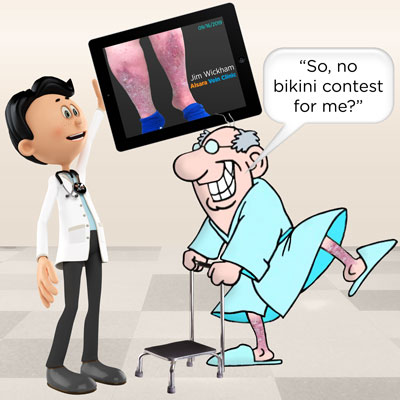
I am humbled by both the confidence that numerous referring providers have in our care and the trust of patients who refer family and friends. For example, Jim*, a 76-year-old gentleman, came to Alsara Vein Clinic after exhausting all options at hospitals and other clinics in the area. With a tracheostomy collar in place, he was unable to talk and breathe at the same time, yet he had much to discuss. After providing his medical history, he cleared his “airway trash”, drew a deep breath, and concluded by saying, “I am hanging by the last straw. My neighbor across the street advised me to come to you. You took care of him when he had no hope that anything could be done.” Since then, the topic of his conversation has been anything but medical. Taking swift breaks to inhale, he seemed more interested in talking about his friends, family and his many aspirations although, as he politely stated, “I realize that I won’t be able to participate in a bikini contest anytime soon!”
Later that week I saw Tom**, a 58-year-old, who had avoided seeking care as he was sure that leg amputation was going to be the only option available, given the advanced stage of chronic venous insufficiency in his leg. It seems that every clinic day has its fair share of patients with swelling, severe leg cramps, and restlessness. We also see many male patients with clots, bleeding, and poorly healing sores in their legs, all of which are features of advanced, chronic venous insufficiency.
A detailed duplex ultrasound scan (Mapping) provides us with a “road map” of all the key veins in the legs. The goal of every treatment modality is to get rid of the underlying varicose veins and restore proper blood flow by routing blood to the healthy veins. The new, modern, minimally invasive treatments allow us the opportunity to eliminate the diseased veins safely and effectively with very little downtime; these are also much safer than surgeries used in the past. Over the last 10 years, further advancements have occurred in our understanding of venous diseases and the options available to treat them. For instance, the latest 1470 nm laser used at Alsara Vein Clinic offers a 40-fold improvement in energy absorption, compared to older generation lasers, resulting in even less bruising and discomfort. All treatments including Endovenous Laser Ablation and Ultrasound Guided Sclerotherapy are performed in the comfort of the office setting and patients can resume normal activities immediately.
I feel very fortunate for the technology and scientific knowledge backed by the experience of successfully treating thousands of patients over the past decade. Although participating in a bikini contest is not completely ruled out for Jim*, I suspect that he will put his legs to much greater use in the years ahead!
Concerns about your legs? Call Alsara Vein Clinic at 816-396-0245 to set up a Consultation today.
Sam Gupta, MD, MPH
* Jim is an actual patient of Alsara Clinic and has graciously given permission to use his quotes, story and images. ** Tom – his name changed to protect confidentiality.
An estimated 60% of women and men suffer from vein disease.
Some of the signs and symptoms include leg pain, achy legs, burning in legs, numbness in legs, leg cramps, heaviness in legs, itching legs, restless legs, tired legs, swelling in ankles or leg calves. Left untreated, it may result in skin discoloration, bleeding veins, sores that heal poorly, and blood clots.
To understand vein disease, you must first understand the function of veins. Arteries are blood vessels responsible for delivering blood to all areas of the body, including the legs. Veins are responsible for collecting the same blood and bringing it back to the heart. Leg veins, located farthest from the heart, have to work extra hard to push blood upward against gravity toward the heart.
Studies have shown that a vast majority of people have genetically weak veins. Now, if you add more risk factors such as standing or sitting for prolonged periods of time, pregnancy, excess weight, and trauma, veins can start to fail. As veins begin to fail, blood starts to pool in the legs resulting in veins that are "varicose"—abnormally swollen or knotted.
Varicose veins are large, bulging veins that are often visible on the skin surface, but the majority are weak or damaged blood vessels below the surface of the skin that cause poor circulation and are only visible with help of an ultrasound.
Spider Veins are smaller versions of varicose veins that usually appear on the skin's surface as small, red to purple blood vessels that resemble a spider's web. While spider veins rarely pose a medical problem, they often signal problems in the larger veins below the skin's surface.
Chronic Venous Insufficiency is a medical condition in which the veins are unable to pump oxygen-depleted blood back to the heart, often resulting in chronic swelling of the legs.
Deep Vein Thrombosis (DVT) is the formation of a blood clot within a deep vein and can be a complication of varicose veins and chronic venous insufficiency. Classic symptoms of deep vein thrombosis include swelling, leg pain, and skin redness of the affected area.
Varicose Veins and Restless Leg Syndrome (RLS) have many symptoms in common: an urge to move your legs, that creepy-crawly feeling, itching, tingling, and restlessness. These symptoms may be an indication of poor circulation, even though you have no visible varicose veins.
Leg swelling (edema) is a common sign of varicose veins. The pooling of blood, increased pressure and subsequent “leakage” causes swelling in the ankles and feet as gravity pulls the fluid down.
Over time, you may develop leg ulcers. Ulcers due to varicose veins are painful and difficult to heal unless the underlying venous backflow is corrected.
Signs and Symptoms
Aching
Burning or numbness
Cramping or 'Charley horse'
Heaviness
Itching
Leg pain
Restlessness in legs
Tiredness
Swelling in feet ankles and calves
Left untreated, may result in skin discoloration, bleeding veins, sores that heal poorly, and blood clots.
It might be surprising to learn that restless leg syndrome, leg cramps, swollen ankles (edema), leg ulcers, varicose veins, and spider veins could all be symptoms of vein disease. We've helped thousands achieve relief with in-office treatments. Alsara Vein Clinic is located north of Kansas City in St. Joseph, MO a.k.a. St. Joe. Schedule yourFree Consultation today with Alsara Vein Clinic. Walk-ins are welcome, no referral necessary!
Treatment of ropey varicose veins may require one or more combinations of the following: Endovenous Laser Ablation, Injection Sclerotherapy (including Ultrasound Guided Sclerotherapy and Catheter Assisted Sclerotherapy), and Microphlebectomy.
Large bulging veins that appear on the skin surface as ropey veins are frequently a major branch of a deeper (inside the leg) saphenous vein, such as the Great Saphenous Vein, which is often, but not always, involved. Ultrasound testing is frequently necessary to determine the level of involvement. If the saphenous vein is involved, it would likely need to be sealed first using Endovenous Laser Ablation (EVLA). This step in itself is sometimes enough to “shrink” the bulging vein. Any remaining unsightly veins may be either closed with sclerotherapy (using medication to seal the vein) or sections of the bulging veins may be removed by microphlebectomy. Unlike vein stripping, microphlebectomy is a simple, out-patient procedure performed under local anesthesia. Using very fine instruments, sections of unwanted veins are carefully removed through tiny openings without the need for sutures and with minimal risk of scarring. Vein treatments may be staged (occur on separate days) or a combination of treatments may be performed on the same day if recommended by your Phlebologist (Vein Specialist).
Now you may be able to get rid of the unsightly ropey varicose veins during your lunch break (and start looking for that pair of shorts you thought you could never wear!).
Because heat dilates the veins, many vein issues worsen during the summertime. As the veins expand with higher temperatures, leaky veins can get even worse, leading to more pooling of blood in your legs and problems associated with it such as pain, tiredness, cramps, swelling, and clots. There is an increased chance of seeing new spider veins, pain, and worse symptoms. Here are tips to help you enjoy the warm season:
Five Tips To Fight Back
Stay Cool Make sure you wear clothes that won’t trap heat. Always use sunblock (SPF 30 or above) not just on your legs, but also on your face and nose, where thinner skin is more prone to developing spider veins
Take a Dive In addition to offering great respite from the summer heat, swimming is one of the best ways to promote normal circulation in your legs. Swimming is a low-impact exercise that saves your joints from the pounding yet increases your heart rate and improves circulation overall. Also, cooling exercises like swimming and brisk evening walks are best because the coolness helps keep the blood vessels from dilating.
Stay Hydrated Keeping your body properly hydrated will help it effectively circulate blood, heal injuries faster, and allow for healthier skin. Though it seems like a no-brainer, patients with vein problems should pay especially close attention to their hydration levels during the summer when the heat can easily dry anyone out. If you plan on being out of the AC, plan to also bring a water bottle along. Avoid caffeine.
Avoid Heels We recommend ats and sandals rather than high heels that keep your calf muscles from effectively pumping blood out of the leg. Wearing lower heels makes your calves work a little harder, keeping blood pumping out of your legs and back to your heart where it belongs.
Wear Compression Stockings They may not be at the top of anyone’s list of hot summer fashions, but compression stockings put pressure on your legs that helps to move blood up and away from your lower legs. Though you may not want to wear them outside during July and August for fear of overheating, wearing them regularly may prevent blood from pooling in your legs, which can cause or worsen vein problems.
Varicose and spider veins have ruined too many summers. To keep them from ruining this one, schedule a free consultation and complimentary vein screening at Alsara Vein Clinic. Current treatments allow us to permanently treat affected veins with no downtime and you can be rid of your compression stockings within days of treatments. Many insurers including Medicare offer coverage. Click here to see Insurance We Typically Accept.
Kick start this summer with healthy legs that look and feel great.

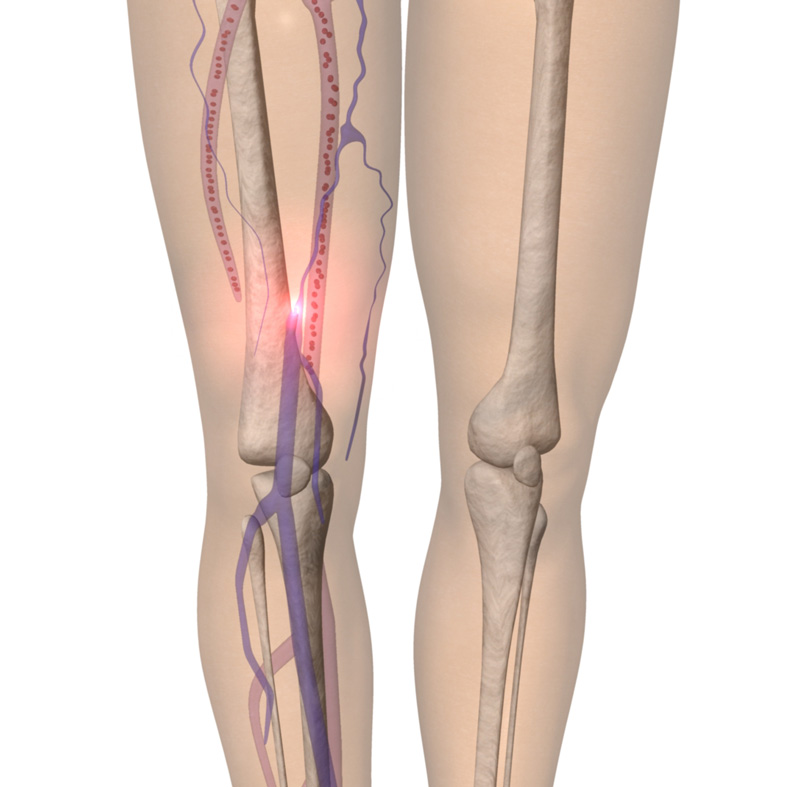 Alsara Vein Clinic exclusively uses the leading edge EVLA technology (1470 nm laser system), which decreases discomfort and bruising, while maintaining the unparalleled efficacy and safety of laser technology. Studies have shown that Endovenous Laser Ablation (EVLA) is more effective in treating varicose veins than Radiofrequency Ablation (VNUS Closure). Traditional laser machines have utilized lower frequencies (810 nm or 980 nm) and target blood (hemoglobin) within the veins. However, there was more, although temporary, bruising and soreness noted with these laser frequencies than with radiofrequency ablation. The new ThermaLite 1470 nmlaser machines target water in the vein wall instead of hemoglobin, which results in much less discomfort, practically no bruising, and a fast return to normal activities. This is particularly important for people living active lifestyles who want to resume their activities right away and would like to wear shorts or skirts. The new 1470nm offers the best of both worlds. Alsara Vein Clinic has treated numerous patients using the new 1470 nmLaser with almost no discomfort or any bruising after the procedure. Our patients cannot be happier with the results.

 Treatment of ropey varicose veins may require one or more combinations of the following: Endovenous Laser Ablation, VenaSeal Closure System, Injection Sclerotherapy (including Ultrasound Guided Sclerotherapy and Catheter Assisted Sclerotherapy), and Microphlebectomy.
 Varicose veins increase the risk of deep vein thrombosis (DVT) by five times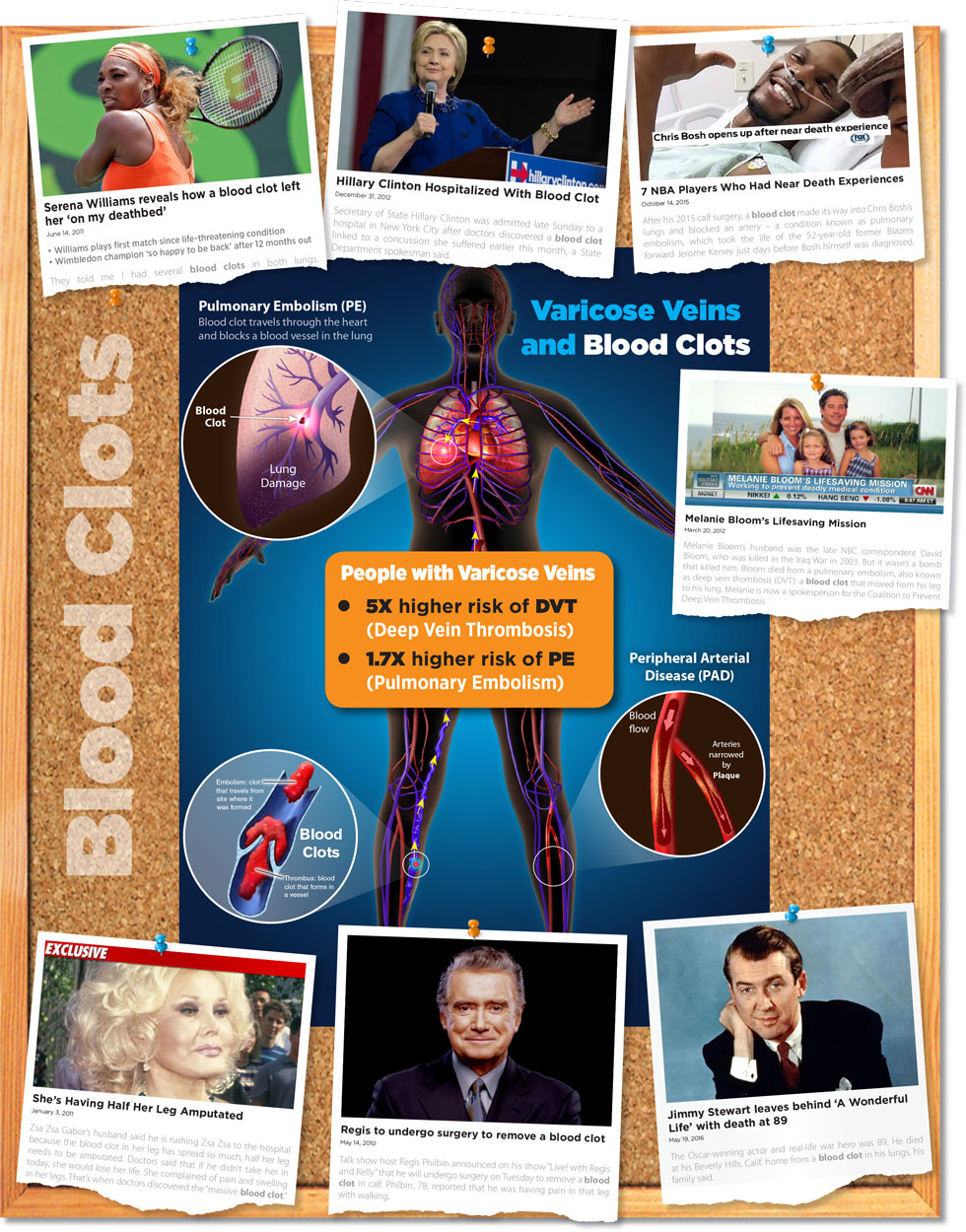

 When your heart beats, it pumps blood through arteries to every part of your body carrying oxygen and essential nutrients. Since you have a limited amount of blood (about 5 liters in an adult), the deoxygenated blood returns to the heart via countless veins in your body. The veins in your legs are farthest from the heart and must work against gravity to push blood back to the heart. Compounded by other risk factors, some veins wear out over time and become “varicose”. The pooling of blood in varicose veins may cause symptoms such as heaviness, tiredness, itching, burning, cramping, restlessness and pain. Left untreated, the increased pressure of blood in the leg veins can leak out, causing problems such as edema, skin discoloration, sores in legs that heal poorly, and frequent skin infections. This condition is called Chronic Venous Insufficiency (CVI).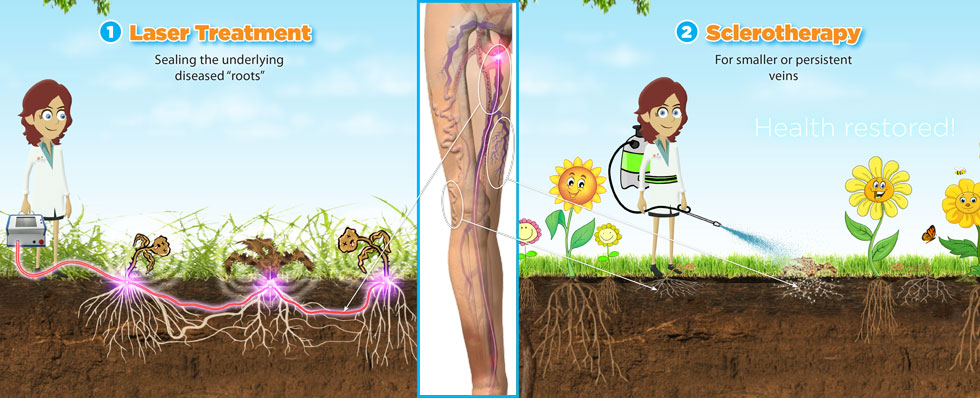

 Stay Hydrated
 Make sure you wear clothes that won’t trap heat. Always use sunblock (SPF 30 or above) not just on your legs, but also on your face and nose, where thinner skin is more prone to developing spider veins.
 Even better, the prolonged use of stockings after the procedure is not required. Once sealed, the diseased veins are gradually absorbed by the body. Your Vein Specialist will help you decide if this novel treatment would be suitable for you.
 I am humbled by both the confidence that numerous referring providers have in our care and the trust of patients who refer family and friends. For example, Jim